For e-commerce executives, parcel delivery has become one of the most unpredictable, and consequential, elements of the customer experience. What was once a back-end operational function is now directly tied to conversion rates, brand perception and long-term loyalty.
Yet the environment continues to grow more complex. Fuel volatility is driving surcharges higher across major carriers. Tariff uncertainty is reshaping cross-border trade flows. And accessorial fees, ranging from residential delivery to peak surcharges, are quietly inflating total shipping costs beyond what most pricing models anticipate.
The result is a perfect storm: rising costs, reduced visibility, and increasing pressure to deliver faster, more transparent experiences.
The hidden challenge: complexity that impacts the customer
While headline rate increases often dominate discussion, the real challenge lies beneath the surface. Accessorial fees, dimensional pricing and fluctuating fuel surcharges have created a system where shipping costs are inconsistent and difficult to predict.
For e-commerce leaders, this is not just a cost issue, it’s a customer experience issue.
Unexpected charges drive cart abandonment. Inconsistent delivery times erode trust. Limited visibility into shipments makes proactive communication difficult. In a market where brands compete on experience as much as price, these friction points directly impact revenue and loyalty.
A shift toward alternative delivery models
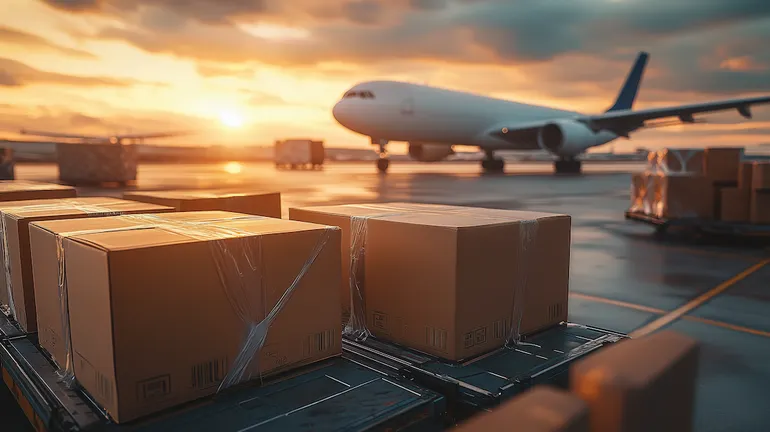
To address these challenges, retailers are increasingly exploring alternative delivery networks, particularly those powered by airlines.
Unlike traditional ground carriers, airline-powered models leverage existing belly capacity on passenger flights to move packages more directly. This reduces transit times, minimizes handoffs and simplifies network complexity.
For domestic shipping, solutions like Delta Cargo DeliverDirect are redefining how packages move across the U.S. Powered by an airline network with over 2,500 flights per day, DeliverDirect enables fast, long-zone delivery with simplified pricing, removing many of the accessorial fees that create unpredictability in traditional models.
More importantly, it gives retailers greater visibility and control. Brands can proactively manage delivery expectations, communicate with customers in real time and resolve issues before they escalate, transforming shipping from a reactive function into a customer experience driver.
Turning cross-border friction into opportunity
Cross-border e-commerce presents even greater complexity. Tariffs, duties and customs processes introduce delays and unexpected costs, while traditional delivery networks rely on multiple handoffs that reduce visibility.
The result is often 7–14 day delivery windows and a fragmented customer experience.
Solutions like deliver-e from IAG Cargo are changing that dynamic. Leveraging a global network spanning 250+ destinations and more than 12,000 weekly flights, deliver-e enables retailers to move goods across borders with speed and consistency that traditional models struggle to match.
By streamlining cross-border flows and reducing touchpoints, deliver-e delivers faster, more reliable SLAs while also introducing clearer pricing structures. This allows retailers to present accurate landed costs upfront, eliminating the surprise fees that often frustrate customers.
The outcome is a more seamless experience: faster delivery, better tracking and fewer post-purchase issues.
Transparency as the foundation of customer-centric delivery
At the core of this shift is transparency, and with it, a more customer-centric model.
Historically, once a package left the warehouse, visibility shifted to the carrier, leaving retailers reactive and customers uncertain. Airline-powered networks are reversing that dynamic. With clearer data, consistent service levels and upfront pricing, retailers maintain visibility from checkout through delivery.
This enables a fundamentally different approach:
- Proactive communication: Real-time updates reduce “Where is my order?” inquiries
- Transparent pricing: Clear costs at checkout build trust and reduce abandonment
- Reliable delivery promises: Consistent SLAs allow brands to compete on speed
- Stronger loyalty: A predictable experience reinforces customer confidence
In this model, delivery becomes an extension of the brand, not just a logistics function.
A strategic lever for growth
As fuel costs fluctuate, tariffs evolve and customer expectations rise, delivery strategy is no longer a fixed cost, it is a strategic lever.
Retailers that rethink their approach can turn shipping into a competitive advantage. Faster delivery drives conversion. Transparency builds trust. Predictability protects margins while enhancing the customer experience.
Airline-powered delivery networks offer a path forward by combining speed, simplicity and visibility, addressing many of the structural inefficiencies in traditional parcel models.
For e-commerce leaders, the opportunity is clear: move beyond reactive shipping strategies and take control of the delivery experience.
Solutions like Delta Cargo DeliverDirect for domestic shipping and deliver-e from IAG Cargo for cross-border commerce are enabling that shift, bringing greater transparency, predictability and customer focus to how goods move from dock to door